Validate ideas before investing in development
5 prototype types, 7 pretotyping methods, and an AI tools overview — in 3 hours you get a rapid validation methodology.
Book a trainingCustomer Development, pretotyping, 5 prototype types in 3 hours — validate hypotheses before investing in development
3-hour methodology workshop on business idea validation. 5 prototype types, Customer Development, pretotyping, AI tools overview, and real cases. Lean Canvas, MVP Canvas, Job Story templates. For accelerators, startups, and project tracks.
5 prototype types, 7 pretotyping methods, and an AI tools overview — in 3 hours you get a rapid validation methodology.
Book a trainingProof-of-Concept, Looks-Like, Works-Like, Rapid, Engineering — clear criteria for each type. When a mockup is enough, when you need a working product. Customer Development: 4 phases from Discovery to Company Building.
Build-Measure-Learn cycle, Product-Market Fit, innovation accounting (vanity metrics vs decision metrics). Lean Canvas and MVP Canvas — filled in during the workshop on your project.
Demonstration of capabilities: vibe-coding platforms (Lovable) vs IDE+agent (Cursor), low-code (n8n), out-of-box (Vercel, Supabase). We cover which tool fits which prototype type.
Mechanical Turk, Pinocchio, Fake Door, Wizard of Oz, Video, Landing Page, One Night Stand. Validate demand before writing a single line of code. Plus 10 pivot types by Eric Ries.
According to CB Insights, the top reason startups fail is a product nobody needs. The team spends 3–6 months developing without validating the idea. Yet pretotyping lets you test a hypothesis in days — before writing a single line of code.
Managers confuse prototype (UX validation), MVP (market validation), PoC (technology validation), and pretotype (demand validation without a product). There are 5 prototype types and 7 pretotyping methods — each solves a different problem. Without this knowledge, teams build a full product when a Fake Door or Wizard of Oz would suffice.
Lovable, Cursor, Bolt, n8n — vibe-coding tools can produce a prototype in hours. But when do you need a working prototype, and when is a Fake Door enough? This workshop gives you the methodological framework: which validation approach to choose based on project stage, resources, and hypothesis type.
42% of startups shut down because the product turned out to be something nobody needed (CB Insights). Teams spend months on development without validating demand or value. Yet methods exist to test ideas in days or even hours — without writing a single line of code.
This workshop is about the methodology of rapid business idea validation: 5 prototype types (from Proof-of-Concept to Engineering Prototype), Customer Development (4 phases: Discovery, Validation, Creation, Building), 7 pretotyping methods (Mechanical Turk, Fake Door, Wizard of Oz, and more), the Build-Measure-Learn cycle, and innovation accounting. We demo AI prototyping tools so you understand the possibilities and know when to apply which approach.
Format: 3-hour workshop with hands-on template work. You fill in validation templates (Lean Canvas, MVP Canvas, Job Story), choose a pretotyping strategy for your project, and gain clear understanding of which prototype type you actually need. We analyze real cases — including honest lessons learned from our own projects.
Managers often confuse three validation tools. A Proof-of-Concept (PoC) tests technical feasibility: "can this be built at all?" A prototype tests UX and user experience: "is this usable?" An MVP tests the market: "will people pay for this?" In the workshop we cover 5 prototype types (Looks-Like, Works-Like, Rapid, Engineering) and provide clear selection criteria — so you don't spend 3 months on an MVP when a one-day Fake Door would suffice.
Most ideas can be tested before writing a single line of code. The Fake Door method — create a page describing the product with a "Buy" button and measure conversion. Wizard of Oz — the user sees a working product, but a human handles tasks behind the interface. Mechanical Turk — automation is simulated manually. There are 7 pretotyping methods in total — each suited for a specific hypothesis type. In the workshop you choose the method for your project and build a validation plan.
Customer Development is Steve Blank's methodology with 4 phases: Discovery (finding the problem), Validation (confirming demand), Creation (acquiring customers), and Building (scaling). Most startups get stuck at phase one because they can't conduct problem interviews and confuse opinions with evidence. In the workshop we cover how to formulate falsifiable hypotheses, which metrics distinguish vanity metrics from decision metrics (innovation accounting), and practice CustDev on your projects using Lean Canvas and Job Story.
I want to validate an idea, but development says «3 months and $20K». And I'm not sure the market even needs it
Solution5 prototype types, pretotyping, Customer Development — you get a methodology for choosing the right validation approach for any idea
I have 5 ideas but don't know which to test first or how to do it quickly
SolutionLean Canvas + CustDev + pretotyping — a framework for prioritizing and validating hypotheses without a development budget
Students don't understand the difference between an idea and a product. Project work turns into endless planning
SolutionWorkshop as a course module: participants leave with filled validation templates and clarity on which prototype type their project needs
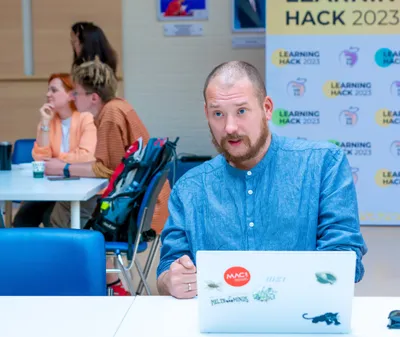
Trainer
Founder and CEO of EdUnit. HSE University graduate. Applies prototyping methodologies in EdTech product development: QuantaQuiz, EdUnit Bot, educational games. Speaker at education innovation conferences.
5 prototype types (PoC, Looks-Like, Works-Like, Rapid, Engineering). Customer Development: 4 phases, Product-Market Fit. Build-Measure-Learn cycle. Innovation accounting: vanity vs decision metrics. Fill in Lean Canvas for your project
Lean Canvas, MVP Canvas, Job Story — fill in for your project. 7 pretotyping methods: Mechanical Turk, Fake Door, Wizard of Oz, and more. 10 pivot types by Eric Ries. Practice Customer Development: formulate hypotheses, choose a validation strategy, define success metrics
How AI tools fit into the validation methodology: vibe-coding platforms (Lovable) vs IDE+agent (Cursor), low-code (n8n), out-of-box (Vercel, Supabase). Vibe-research: synthetic personas for Customer Development. We cover which tool fits which prototype type and at which validation stage
EnergyTrilemma: how a team of 4 vibe-coded a simulation game in 2 months. EdUnitBot: a story of three failures — why every development role exists for a reason, why design-first and documentation-first matter
Discuss validation strategy for each project: which prototype type to choose, what to validate next, how to measure, when to involve development. Tool recommendations
Prices are indicative. Final cost confirmed in contract.
MVP without a developer — Cursor, Claude Code, and Codex hands-on. In 12 hours, build a working prototype, master agentic development, and learn AI coding limits. For founders and managers.
No dev team and off-the-shelf platforms don't fit? We design and build custom educational IT solutions for your needs: bots, platforms, AI tools.
From-scratch training with ChatGPT, Claude, and Perplexity. First result in 3 hours on your own tasks. For business, educators, and anyone getting started.