A skill AI cannot replace
Two sessions with practice in between: emotion recognition, empathy, and conflict management using real workplace situations.
Book a trainingTeam conflicts cost 2.8 hours per employee per week. Toxic culture is the #1 reason people quit — 10x stronger than salary. This emotional intelligence training gives your team practical tools: emotion recognition, empathy, and conflict management — through real workplace scenarios in 2 sessions.
Conflicts cost 2.8 h/week per employee. EQ training: emotion recognition, empathy, de-escalation. Two 2-hour sessions with practice on your real situations.
Two sessions with practice in between: emotion recognition, empathy, and conflict management using real workplace situations.
Book a trainingAccording to CPP Global, employees spend an average of 2.8 hours per week on conflicts — $359 billion in lost productivity annually. In remote teams, the problem intensifies: no nonverbal cues, messages read in "the wrong tone."
MIT Sloan: toxic culture is the top predictor of attrition, 10x stronger than salary. People don't leave jobs — they leave managers who can't give feedback or manage emotions.
Automation takes routine. What remains for humans — negotiations, leadership, client relations, conflict management. WEF projects 26% growth in EQ demand by 2030.
Emotional intelligence (EQ) is the ability to recognize emotions, understand their impact on behavior, and use this information for effective interaction. According to TalentSmart, 90% of top performers have high EQ. At the same time, Hay Group research shows teams with high emotional intelligence demonstrate 20% higher productivity.
As automation and AI grow, hard skills depreciate — routine tasks go to algorithms. Emotional intelligence, on the contrary, grows more valuable: negotiations, leadership, client relations, conflict management — all remain human territory. WEF projects 26% growth in EQ demand by 2030.
EdUnit's emotional intelligence training uses a two-session format (2 + 2 hours, one week between sessions). Session 1: emotion recognition, triggers, self-diagnosis. A week of practice. Session 2: empathy, active listening, conflict management. This format is significantly more effective than single-day workshops for building lasting skills.
Leaders with high EQ resolve conflicts 40% more effectively (Consortium for Research on Emotional Intelligence). The training provides specific tools: Plutchik's model for emotion recognition, three types of empathy, Thomas-Kilmann's five strategies. A week of practice between sessions reinforces skills in real work situations.
Research shows 70% of one-day training content is forgotten within 24 hours. The "2 + 2 hours with a week of practice" format solves this. Participants apply tools between sessions, keep a reaction tracker, and in session two, analyze real experience. Skills form through action, not lectures.
Team burning out, simmering conflicts, feedback doesn't land. People leave 'because of the atmosphere'
SolutionTools for managing team emotions, de-escalating conflicts, and creating a healthy environment
Remote work killed informal communication. Messages read in "the wrong tone," misunderstandings grow
SolutionShared language for discussing emotions at work. Empathy and active listening skills
Turnover rising, exit interviews show "toxic culture," but unclear what to do
SolutionMeasurable training: two-session format with practice between meetings. Results visible in a week
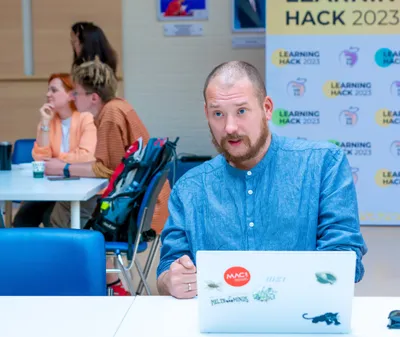
Trainer, CEO EdUnit
Founder of EdUnit, facilitator. HSE University graduate (philosophy). Ex-Director of Educational Intensives at University 20.35, worked with 75+ universities. Conducts emotional intelligence and communication trainings for corporate teams. Speaker at 10+ conferences.
Emotion recognition, Plutchik's model, emotional triggers. Self-diagnosis exercises.
Reaction tracker, observing reactions. Assignment: apply techniques in real situations.
Empathy, active listening, conflict management. Role-plays based on participants' situations.
Private session for your team. Role-plays based on real company situations. Separate focus for managers.
Mixed group. Cross-industry experience sharing. Safe practice space.
Prices are indicative. Final cost confirmed in contract.
88% say feedback matters, but 57% don't get honest feedback. Training with role-plays: SBI, feedforward, BOFF. 3 hours of practice on your real situations.
Critical thinking training: 8 cognitive biases, 9 argumentation errors, AI for fact-checking. 6 hours of practice on business cases.
A 3-hour simulation: two scenarios, 20+ decisions, discussion and reflection. For energy companies, ESG teams, universities.