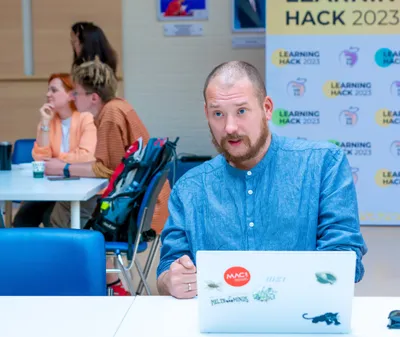
Vitaly Genarov
Facilitator
Master of Philosophy (epistemology, logic, argumentation). CEO of EdUnit. Delivered over 30 trainings and strategic sessions. University teaching experience.
Strategy sessions that end with an action plan and owners — not photos of flipcharts
External strategy session facilitator: pre-session interviews, every voice heard, action plan with owners in 48 hours.
Agenda built from participants' real problems, not leadership assumptions. 5–10 individual interviews.
Brainwriting, dot voting, world cafe — techniques that include introverts and prevent extrovert dominance
Ideas, decisions, and connections captured visually in real time. After the session — a ready artifact, not a pile of sticky notes
Not 'meeting minutes' — an action plan: decisions, owners, deadlines, success criteria
Most strategy sessions generate ideas but don't create executable plans. A month later, no one remembers what was agreed. The reason — no facilitator to drive to specifics.
When the CEO speaks first, 80% of participants adjust their opinions to match (anchoring effect). The strategy session becomes a leadership monologue — while real problems remain unspoken.
HR or a department head can't simultaneously facilitate and participate. Internal politics, hierarchy, conflicts of interest — all prevent honest conversation.
Strategic session facilitation is a process where an external expert guides group discussion so the team reaches concrete decisions and an action plan. Most strategy sessions without professional facilitation don't produce measurable results. The key difference: the facilitator doesn't impose solutions but creates a structure where every participant's voice is counted.
EdUnit specializes in strategy sessions for educational organizations and companies implementing technology. EdTech expertise enables working with topics at the intersection of education, technology, and organizational change.
The development strategy is written, but each department pulls in its own direction. No shared vision
SolutionExternal facilitator with education expertise builds shared vision and action plan
We need a year-long strategy, but the team has conflicts and unspoken disagreements
SolutionA neutral facilitator creates a safe space for honest conversation
My ideas aren't heard in general meetings — only top management speaks
SolutionMethods that give voice to every participant, regardless of position
Facilitator
Master of Philosophy (epistemology, logic, argumentation). CEO of EdUnit. Delivered over 30 trainings and strategic sessions. University teaching experience.
Define session goals, interview 5–10 key participants. Build the agenda from real problems
Develop structure, select methods for the specific tasks and participant mix. Align with the client
Strategic session facilitation: structured exercises, visualization, every voice included
Document with decisions, owners, and deadlines. Follow-up meeting in 4–6 weeks
Prices are indicative. Final cost confirmed in contract.
67% of AI projects never reach production. We guide companies from process audit to working AI tools in teams. Interviews, pilot, training — no downtime.
60% of project mentors in universities rely on intuition. Supervision: case review, approach correction, mentor retention. Group and individual formats.
88% say feedback matters, but 57% don't get honest feedback. Training with role-plays: SBI, feedforward, BOFF. 3 hours of practice on your real situations.